From orange to purple for International Day of Persons with Disabilities
This week, we’re acknowledging the International Day of Persons with Disabilities and sharing Through my lens – a four-part series of stories from ING colleagues who navigate life and work with disabilities and neurodiverse conditions.
On 3 December, the International Day of Persons with Disabilities invites us to listen, learn, and appreciate the diverse experiences – both within and beyond the workplace – that shape our colleagues’ journeys at ING. Some colleagues might have conditions that are visible, whilst others we may not be able to see. Approaching their experiences with curiosity, empathy and openness helps us all better understand and appreciate the stories they choose to share.
“Through my lens” is our colleague’s way of sharing, in their own words, what it’s like to navigate work and life while living with a disability or neurodiverse condition. The moments that make collaboration easier or harder, the misunderstandings that can happen, the small changes that help. This series supports our commitment to a workplace where everyone feels respected, understood, supported to succeed and drive business impact.
In the words of MBB member and Disability and Neurodiversity sponsor Daniele Tonella:
I’m really proud of the progress we’ve made in creating a workplace where everyone can thrive. Since launching our global disability and neuro-inclusion strategy last year, our Enable ERGs have grown significantly - there are now nine across ING! I’m excited to keep pushing for bold changes as we head into 2026.
Let’s start with Amy Brown, a financial crime champion from ING Americas.
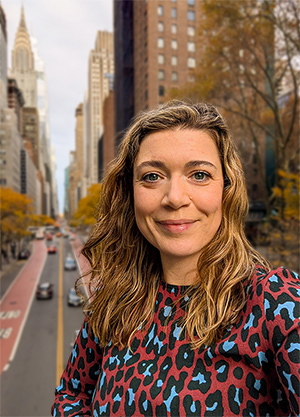
Wired differently
“Mornings are when I can hyperfocus.”
I’ve learned over time how my brain works best, and I build my day around that.
From the moment my eyes open my brain is at full speed thinking through all the things I need to do. So, instead of cramming onto the subway and arriving overstimulated, I leave earlier to walk and take the ferry across the river. It gives me a calm space to think big and burn off some of my hyperactive energy in a structured way. By the time I arrive at my desk, I’ve emailed myself a bunch of reminders, new ideas, and talking points for meetings. My day’s ready to start.
Mornings are when I can hyperfocus, so I block that time for tasks that need concentration. Dyslexia and ADHD affect different people in different ways. For me, I know that looking at spreadsheets later in the day will take up twice my time and energy, so I plan my afternoons around collaboration and problem solving.
In meetings, I’m always taking notes. I know it can look a bit intense, but it’s just how I stay tuned in and remember what’s been said. My diary and calendar are colour coded, and I have folders for everything—that’s how I keep my hyperactive brain in check. If we agree something in a passing chat and I don’t have my notebook, I’ll usually ask you drop me a reminder email. Not because I’m trying to hand anything off, just because if it’s in my inbox, it’ll get done.
“When people are excited, I feed off their energy. It’s my favourite part of being neurodivergent.”
People often say ADHD comes with a heightened sensitivity to other’s emotions, and I recognise that in myself. It helps me connect, though it can feel overwhelming at times. When a meeting turns tense, I feel it. Most people do. But with me it can take a little longer to shake it off, so I’ve learned how to manage that. On the flip side, when people are excited about an idea, I feed off their energy, which sparks more creativity and momentum. It’s my favorite part of being neurodivergent.
Getting my diagnosis was actually a relief. For a long time I wondered Why can’t I remember things the way other people do? or Why does my brain never switch off? When I finally understood it, things clicked into place. I realised, I’m not broken—I’m just wired differently. It’s like Mac and PC. Both get the job done; they just do it differently.
“Estimates suggest one or two people in ten are neurodivergent.”
I joined this series because every open conversation helps. I understand that people without a neurodiverse condition can worry they’ll say something wrong. Those living with one can fear that being open about it might affect their career prospects. But in most teams of ten, estimates suggest that one or two are likely to be neurodivergent, even if no one talks about it. The more we share experiences, the easier it is for everyone to talk, ask questions, and support each other.